
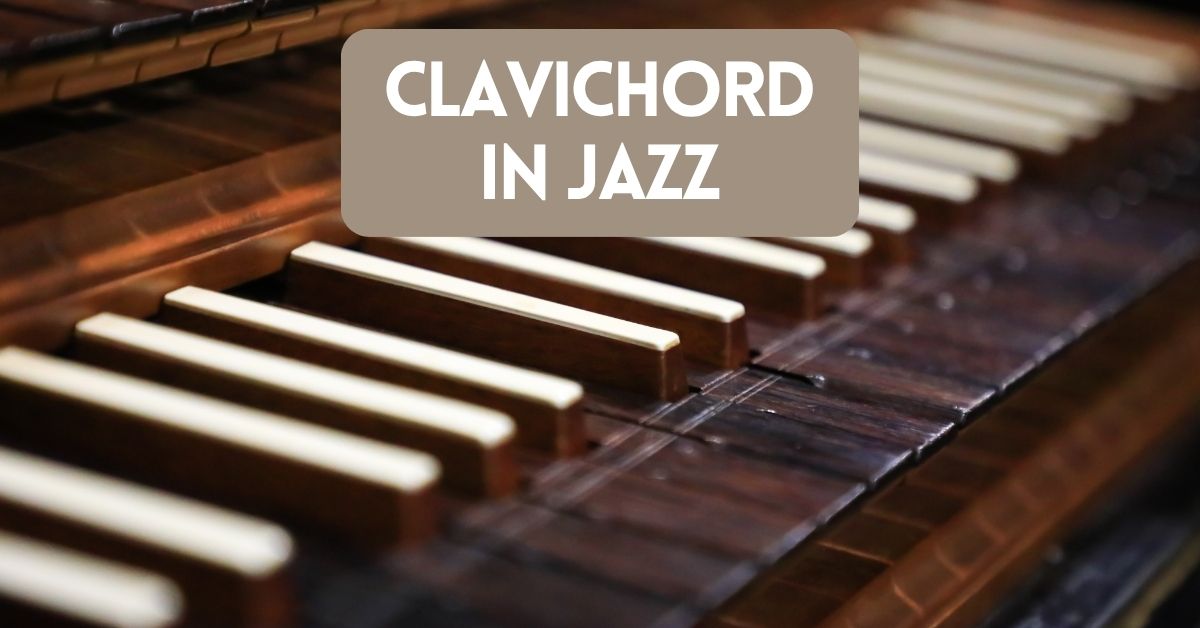
Most people don’t associate the clavichord with jazz. Its delicate sound belongs more naturally in a quiet room than a bustling jazz club. Yet two legendary jazz pianists, Oscar Peterson and Keith Jarrett, explored the expressive possibilities of this centuries-old keyboard instrument and created recordings unlike much of their better-known work.
I first encountered the clavichord through Keith Jarrett’s remarkable recording, Book of Ways. I had never heard a clavichord before, and I was immediately captivated.
What struck me most was how much the instrument sounded like an acoustic guitar. The music felt incredibly intimate, with beautiful expressive nuances that seemed impossible to produce from a keyboard. The music was peaceful, delicate, and deeply personal.
That first encounter eventually inspired me to acquire a clavichord of my own.
But my story is not unique. Decades earlier, Oscar Peterson experienced a similarly powerful introduction to this unusual instrument.
Azure Hills Music contains affiliate links and is a member of the Amazon Services LLC Associates Program. As an Amazon Associate, we earn from qualifying purchases at no extra cost to you when you purchase using one of these Amazon links. Read our disclaimer and privacy policy for more information.
What Is a Clavichord?
The clavichord is one of the earliest types of European stringed keyboard instruments, with a history stretching back to at least the 15th century. People used it widely for private music-making, teaching, practicing, and composing, especially during the Baroque and Classical periods.
Unlike a harpsichord, which plucks its strings, or a piano, whose hammers strike and then rebound from the strings, the clavichord produces its sound through small metal blades called tangents.
When a player depresses a key, the tangent strikes a string and stays in contact as long as the key is held down. That contact gives the performer an unusual degree of control over the note.
The clavichord is extraordinarily quiet, but it offers expressive possibilities that distinguish it from other keyboard instruments. A player can shape notes through variations in touch, create subtle changes in pitch, and even produce a gentle vibrato known as Bebung by varying finger pressure on a depressed key.
The resulting sound can be remarkably intimate. At times, the clavichord resembles a softly plucked guitar, lute, or other delicate stringed instrument. These qualities make it especially intriguing for musicians interested in exploring expression and improvisation.
Although we often associate the clavichord with Bach and other early keyboard composers, its expressive qualities have also drawn jazz musicians.
Oscar Peterson’s Unusual Introduction to the Clavichord
One of the most fascinating stories about the clavichord in jazz involves Oscar Peterson and a somewhat unexpected musical influence: former British Prime Minister Sir Edward Heath. Heath, who served as Prime Minister from 1970 to 1974, was an accomplished amateur musician and an enthusiastic clavichord player.
In a June 2006 article for The British Clavichord Society Newsletter, Garry Broughton recounted an unusual musical encounter between Heath and Peterson, drawing on their published recollections.
During the recording of a British television program in 1976, Heath appeared as Peterson’s guest and discussed how playing the clavichord had helped him find peace during the political pressures of his premiership. Heath then performed on his clavichord in the television studio. According to Peterson’s autobiography, Oscar Peterson: A Jazz Odyssey, the performance left a profound impression.
Peterson was particularly moved by what he described as the instrument’s “highly introspective and delicately personal sound.” So captivated was Peterson that he visited the London instrument makers Morleys the following week and arranged to have a clavichord made for him. It is a wonderful example of how musical inspiration can arrive from the most unexpected sources. And in Peterson’s case, that discovery soon led to an unusual jazz recording.
Oscar Peterson and Joe Pass: Porgy and Bess on Clavichord and Guitar
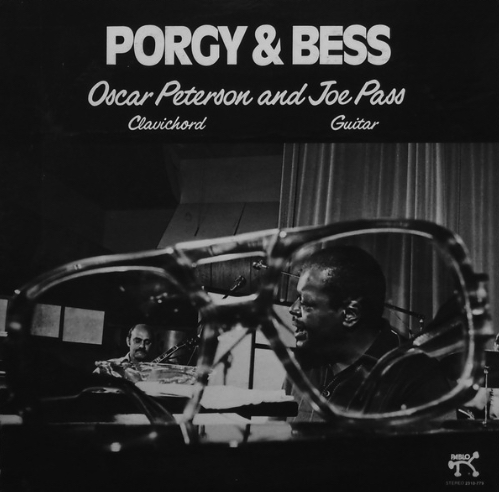
In 1976, Oscar Peterson teamed with guitarist Joe Pass to record an album of music from George Gershwin’s Porgy and Bess.
What makes this recording so unusual is that Peterson set aside the piano and performed throughout the album on the clavichord. Pass accompanied him on acoustic guitar. The combination is a fascinating departure from the sound normally associated with Peterson, whose spectacular piano technique, powerful swing, and dazzling improvisations made him one of jazz’s most celebrated pianists.
The clavichord demands a very different approach to music. Its restrained volume and delicate tone naturally encourage the performer to explore subtle variations in phrasing, articulation, and dynamics. Paired with Joe Pass’s acoustic guitar, the instrument finds a particularly sympathetic musical companion. Both instruments offer the listener a sense of individual strings coming to life. Notes emerge, resonate briefly, and fade, leaving space for the next musical phrase. The resulting arrangements have a chamber-music quality, with the two performers engaging in a gentle musical conversation.
Familiar Gershwin melodies such as Summertime, I Loves You, Porgy, and It Ain’t Necessarily So take on an entirely different character in this setting. For listeners accustomed to Peterson’s commanding presence at the piano, this recording offers a chance to hear another side of his musical personality. It also demonstrates that jazz expression need not depend on volume, speed, or rhythmic intensity.
Sometimes the most interesting musical statements are the quietest.
Keith Jarrett’s Book of Ways: A Jazz Improviser’s Exploration of the Clavichord
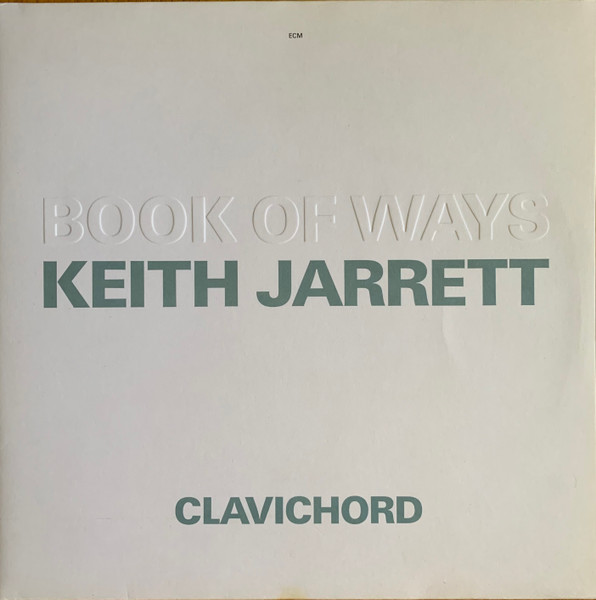
A little more than a decade after Peterson’s clavichord recording, another great jazz pianist undertook an even more extensive exploration of the instrument.
Keith Jarrett recorded Book of Ways: The Feeling of Strings on July 14, 1986, and ECM Records released it in 1987. Unlike Peterson’s recording of familiar Gershwin compositions, Jarrett’s album consists of 19 completely improvised pieces.
Jarrett created the music spontaneously in the recording studio, without prepared compositions.
Three clavichords were available for the session. Two were angled so Jarrett could play both simultaneously, while a third stood nearby. Jarrett moved between playing individual clavichords and combining two instruments, creating textures not ordinarily possible on a single keyboard. The team completed the recording in about four hours.
The engineers recorded the instruments with microphones positioned very close to them, capturing the clavichord’s unusually quiet sound and subtle dynamic variations. The result is a fascinating collection of improvisations that reveal just how expressive this seemingly limited keyboard instrument can be.
The Sound of Book of Ways
One remarkable aspect of Book of Ways is how difficult it is to describe the instrument’s sound. At moments, the music suggests an acoustic guitar or lute. Elsewhere, it takes on a more percussive character, with delicate rhythmic patterns and unexpected accents. Some passages evoke early European keyboard music, while others explore sounds and textures that seem far removed from the clavichord’s traditional repertoire.
Jarrett’s musical imagination moves freely through these possibilities.
Listeners familiar with his solo piano improvisations will recognize his fascination with melody, spontaneous musical development, and rhythmic exploration. But the clavichord reveals these qualities in an entirely different setting. Instead of the expansive resonance and powerful dynamics of a concert grand piano, we encounter a highly personal instrument that requires the listener’s close attention. What we hear is not simply a jazz pianist adapting his familiar techniques to an antique keyboard. We hear a musician discovering what the instrument itself has to say.
How Keith Jarrett Inspired Me to Own a Clavichord
My introduction to Book of Ways was one of those musical experiences that stayed with me long after the recording ended. As a pianist and keyboard player, I was familiar with a wide range of keyboard sounds, but I had never heard anything quite like this.
The clavichord fascinated me because its tone seemed to exist somewhere between keyboard and plucked-string instruments. I especially loved how it resembled an acoustic guitar. The sound had a natural, almost fragile quality. Even the smallest expressive gestures seemed important. Subtle changes in pitch and dynamics gave individual notes a personality I hadn’t expected from a keyboard. It was beautiful, intimate music, and the whole experience felt extraordinarily peaceful.
The recording changed my appreciation of what a keyboard instrument could be. Eventually, that fascination grew into a desire to own a clavichord.
I learned about a particular model of clavichord that Keith Jarrett was reported to own, and I decided to acquire the same model for myself. My instrument was finished by Charles Wolff.
There is something special about having a personal connection to the sound of an instrument that first inspired you through a recording.
Listening to Book of Ways had introduced me to the clavichord’s extraordinary musical possibilities. Acquiring one allowed me to explore those possibilities firsthand. It also gave me a greater appreciation for the instrument’s sensitivity.
The clavichord responds to the player’s touch in ways that are quite different from a modern piano. Small differences in pressure and articulation become part of the musical expression. And because it is such a quiet instrument, playing it is a very personal experience. That intimacy is perhaps what I appreciate most.
Why Is the Clavichord So Rare in Jazz?
Given its expressive qualities, it may seem surprising that more jazz musicians haven’t explored the clavichord.
The main obstacle is its limited volume. Jazz has traditionally been performed with drums, bass, horns, and other instruments that produce considerably more sound than an acoustic clavichord.
Without amplification, the clavichord can easily be overwhelmed. Even the most enthusiastic clavichord player would struggle to make the instrument heard in a conventional jazz ensemble. Its limited dynamic range also requires musicians to reconsider how they approach the keyboard.
Yet these apparent limitations can become creative opportunities. The clavichord encourages attention to detail, subtle articulation, and the expressive shape of individual notes. Its intimacy can be an asset in solo performance or carefully balanced small ensembles, particularly when modern recording techniques help reveal its delicate sound.
Peterson demonstrated how beautifully the clavichord could blend with an acoustic guitar. Jarrett showed how the instrument could become a vehicle for spontaneous solo improvisation. Neither recording suggests that the clavichord is likely to replace the piano in jazz. Instead, they illustrate how an unfamiliar instrument can inspire musicians to reconsider their approach to sound, technique, and expression.
Is a Clavichord the Same as a Clavinet?
One important distinction is worth mentioning.
Don’t confuse the acoustic clavichord heard on these recordings with the Hohner Clavinet, the amplified keyboard famous for its use in funk, rock, and popular music.
The Clavinet was developed in the 1960s and draws inspiration from the clavichord’s string-striking action. However, its amplified, punchy, percussive sound differs sharply from the quiet, intimate character of a traditional acoustic clavichord. If you are familiar with the keyboard sound on Stevie Wonder’s Superstition, you have heard a Clavinet. The instrument Peterson and Jarrett use belongs to an entirely different acoustic world.
Two Clavichord Jazz Recordings Worth Hearing
If you are curious about the clavichord, these two recordings offer excellent introductions.
Oscar Peterson and Joe Pass — Porgy and Bess (1976)
Recorded for Pablo Records, this album pairs Peterson’s clavichord with Pass’s acoustic guitar in arrangements of George Gershwin’s music.
Start with Summertime or I Loves You, Porgy to hear how naturally the two instruments complement one another.
Keith Jarrett — Book of Ways: The Feeling of Strings (1987)
Released on ECM Records, this two-disc album presents 19 spontaneous clavichord improvisations. Jarrett explores a surprisingly broad range of musical textures and expressive possibilities, sometimes performing on two clavichords simultaneously.
I particularly recommend this recording to anyone who wants to hear how a great improviser responds to the unique character of an unfamiliar instrument.
It was my introduction to the clavichord, and it remains a recording of special personal significance.
Final Thoughts: The Beauty of Quiet Music
The clavichord may never become a mainstream jazz instrument, but its appearance in the musical lives of Oscar Peterson and Keith Jarrett reminds us that creative inspiration can come from unexpected places.
Peterson’s fascination began after hearing a British Prime Minister perform on an instrument that was already centuries old.
My own fascination began with a Keith Jarrett recording that opened my ears to an entirely new world of keyboard expression.
What connects these experiences is the realization that music does not need to be loud or technically spectacular to have a profound impact.
Sometimes an instrument’s greatest strength is its ability to express the smallest musical gestures. The clavichord invites the player to listen more carefully, to explore the relationship between touch and sound, and to appreciate the beauty of an individual note. For me, that is what makes it so special. And perhaps that is why, centuries after its invention, this quiet little keyboard continues to inspire musicians.
Arthur Dobrucki – Azure Hills Music
Related Reading
References and Further Listening
- Garry Broughton, “The Clavichord and Affairs of State (and Jazz),” The British Clavichord Society Newsletter, No. 35, June 2006, pp. 21–22.
- Oscar Peterson, Oscar Peterson: A Jazz Odyssey, 2002, particularly pp. 257 and 286, as cited by Broughton.
- Edward Heath, Music, A Joy for Life, Pavilion Books, 1997, pp. 99–102, as cited by Broughton.
- Oscar Peterson and Joe Pass, Porgy and Bess, Pablo Records, 1976. See Concord Records: https://concord.com/concord-albums/porgy-and-bess/
- Keith Jarrett, Book of Ways: The Feeling of Strings, ECM Records, 1987. See ECM Records: https://ecmrecords.com/product/book-of-ways-clavichord-keith-jarrett/