
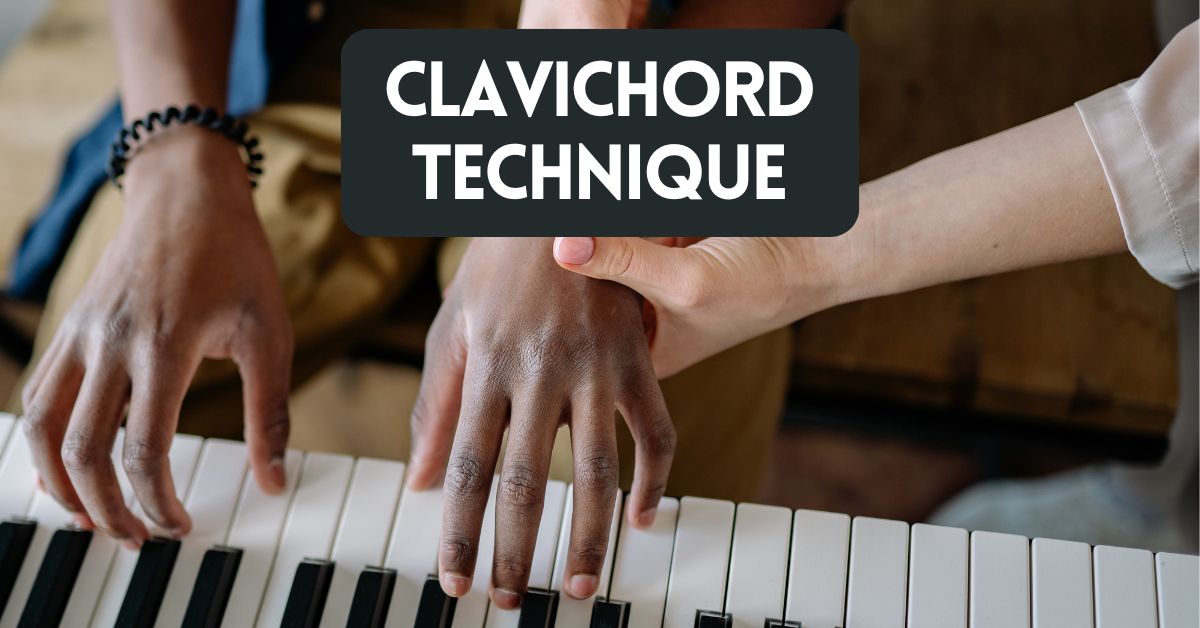
The clavichord is one of the most intimate of keyboard instruments. Unlike the modern piano, where the hammer strikes the string and immediately leaves it, the clavichord’s tangent remains in contact with the string for as long as the key is held. This gives the player unusual control over the beginning, continuation, and release of each note. It also makes the instrument wonderfully revealing: every gesture of the finger matters.
For pianists approaching the clavichord, the first lesson is often one of restraint. The instrument does not reward force in the way a modern piano can. Instead, it asks the player to listen more closely, to shape phrases through touch, timing, and articulation, and to discover beauty in small gestures.
Azure Hills Music contains affiliate links and is a member of the Amazon Services LLC Associates Program. As an Amazon Associate, we earn from qualifying purchases at no extra cost to you when you purchase using one of these Amazon links. Read our disclaimer and privacy policy for more information.
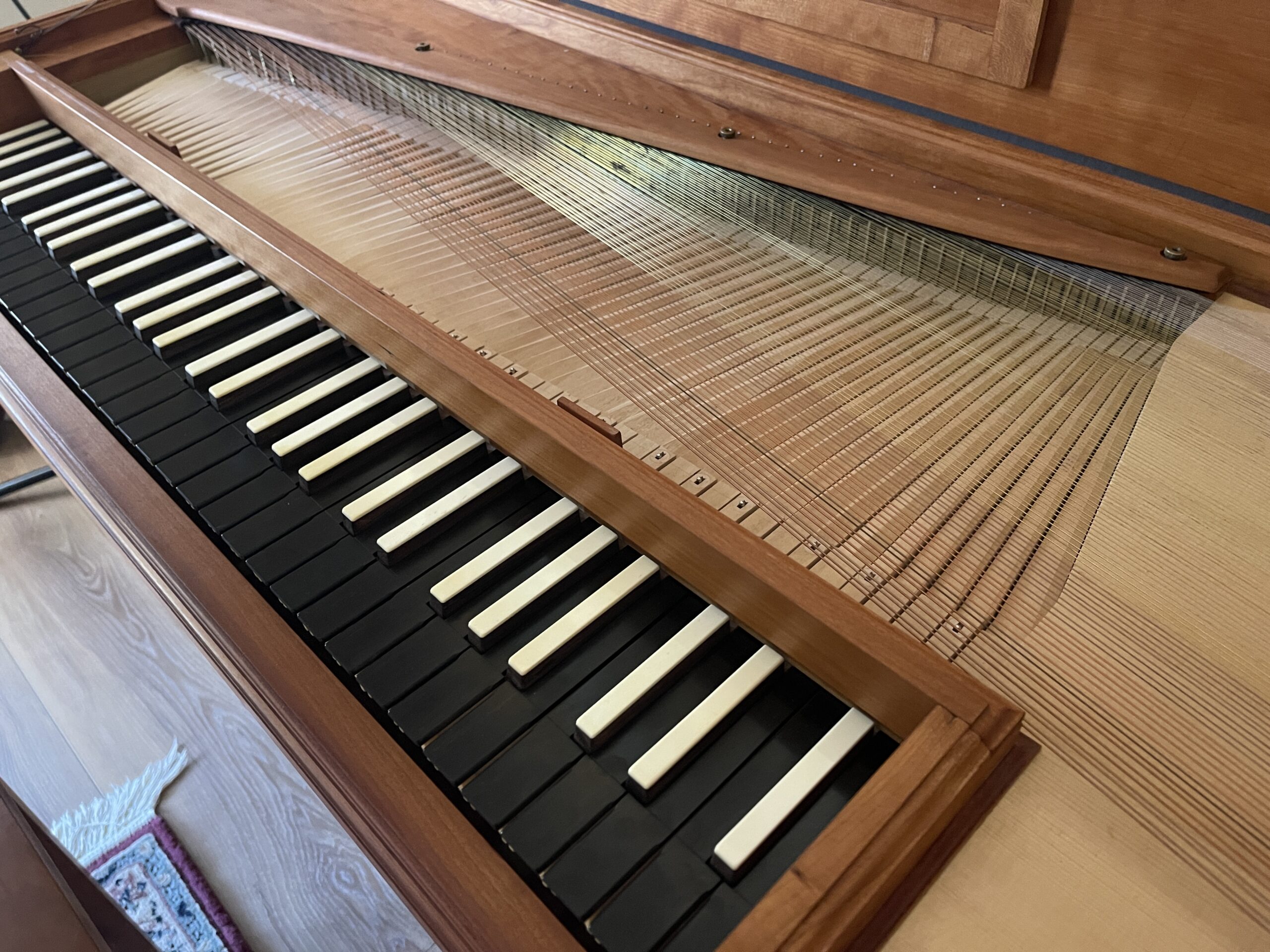
What Pianists Need to Rethink
Paul Simmonds, speaking at a Clavichord Course at West Dean College in April 2006, observed that harpsichord and clavichord technique are closely related. Both instruments belong to an earlier keyboard world in which articulation and timing are central to expression. But the clavichord has one expressive advantage over the harpsichord: it can produce dynamic nuance. A player can make notes softer or louder and, in some cases, even apply a subtle vibrato-like effect known as bebung.
Still, dynamics are only part of good clavichord playing. In the music of J.S. Bach and other Baroque composers, the primary tools of expression are often articulation and agogic accent. Articulation refers to the way notes are separated or connected. Agogic accent means giving the effect of emphasis by slightly lingering on a note rather than simply playing it louder.
Articulation Over Volume
This is a crucial distinction for pianists. On the modern piano, we often shape a phrase through dynamic contour: a crescendo, a diminuendo, or a stronger attack on an important note. On the clavichord, those tools exist, but they must be used with great subtlety. The more historically appropriate question is often not “How loud should this note be?” but “How long should this note live?” or “How much space should there be before the next one?”
In much Baroque keyboard music, the normal touch was not continuous legato. Instead, the standard articulation was very slightly detached: one note should cease just before the next begins. This tiny silence between notes gives the music shape, clarity, and speech-like rhythm. Legato, rather than being the default, was often treated as a special effect or ornament.
The Importance of Release
This approach changes the way we practice. Instead of trying to make everything smooth, the clavichord player learns to listen for the precise release of each note. The end of the note becomes as important as the beginning. A phrase is shaped not only by the notes that sound, but by the tiny silences between them.
The clavichord also encourages a different physical relationship to the keyboard. The touch must be careful, firm, and controlled. The player initiates the sound, sustains it, and releases it with deliberate attention. Because the finger remains connected to the sounding mechanism, the instrument exposes unevenness, harsh attacks, and careless releases. This can make the clavichord humbling at first, especially for pianists, but it also makes it a remarkable teacher.
Shaping a Musical Line
A useful practice goal is to make each line sing without relying primarily on volume. In contrapuntal music, this means giving each voice its own direction through timing, articulation, and touch. A subject entry might receive a little more time. A cadence might breathe. A dissonance might be allowed to lean gently before resolving. These small decisions bring the music to life.
Three Listening Priorities for Clavichord Practice
The clavichord player should therefore practice three kinds of listening.
First, listen to articulation. Are the notes too connected, too clipped, or naturally spoken?
Second, listen to timing. Are important notes given enough space and presence without becoming exaggerated?
Third, listen to sound quality. Is the tone beautiful, controlled, and appropriate to the phrase?
A Quiet Instrument With Deep Lessons
For pianists, the clavichord offers a valuable corrective. It discourages the habit of relying on pedal, arm weight, and broad dynamic gestures. It asks instead for finger control, refined release, and awareness of silence. It reminds us that early keyboard music is not simply a matter of playing the right notes on an old instrument. It requires a different way of thinking, hearing, and touching the keys.
At its best, clavichord technique is not about making a small instrument sound larger. It is about discovering how much expression can live inside a quiet sound.
Arthur Dobrucki – Azure Hills Music