
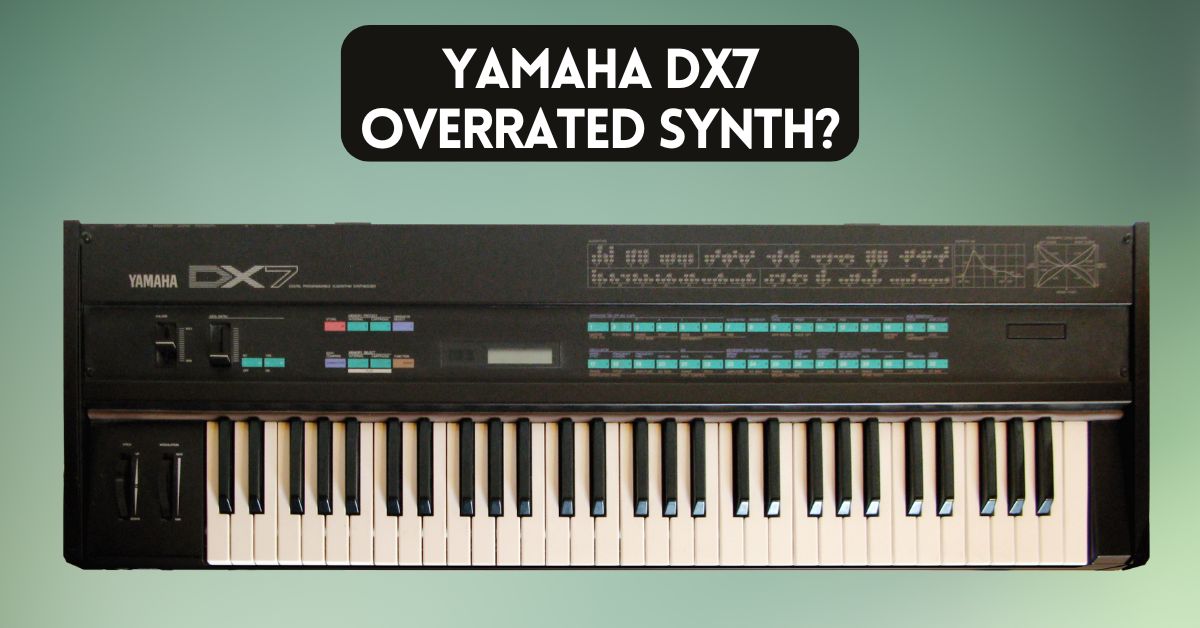
The Yamaha DX7 revolutionized music production when it debuted in 1983, becoming one of the best-selling synthesizers of all time. Its digital FM synthesis brought crystal-clear sounds and affordable pricing to musicians worldwide, defining the sonic landscape of the 1980s and beyond. Yet, despite its popularity, the Yamaha DX7 cons bolster the argument that it is an overrated synth.
Here’s the uncomfortable truth that many vintage synth enthusiasts won’t admit: the DX7’s legendary status might be more a matter of nostalgia than substance. While it deserves credit for democratizing synthesis and introducing groundbreaking technology, the reality is that this iconic instrument has some serious limitations that modern musicians should understand.
After decades of hands-on experience with the DX7 and its variants, it’s time for an honest assessment. From its notoriously difficult programming interface to its harsh digital character, the DX7’s shortcomings become apparent once you move beyond the hype. Let’s examine why this synthesizer giant might not be deserving of all the praise it receives.
Azure Hills Music contains affiliate links and is a member of the Amazon Services LLC Associates Program. As an Amazon Associate, we earn from qualifying purchases at no extra cost to you when you purchase using one of these Amazon links. Read our disclaimer and privacy policy for more information.
The Programming Nightmare That Defined a Generation
1. Difficult Programming Interface
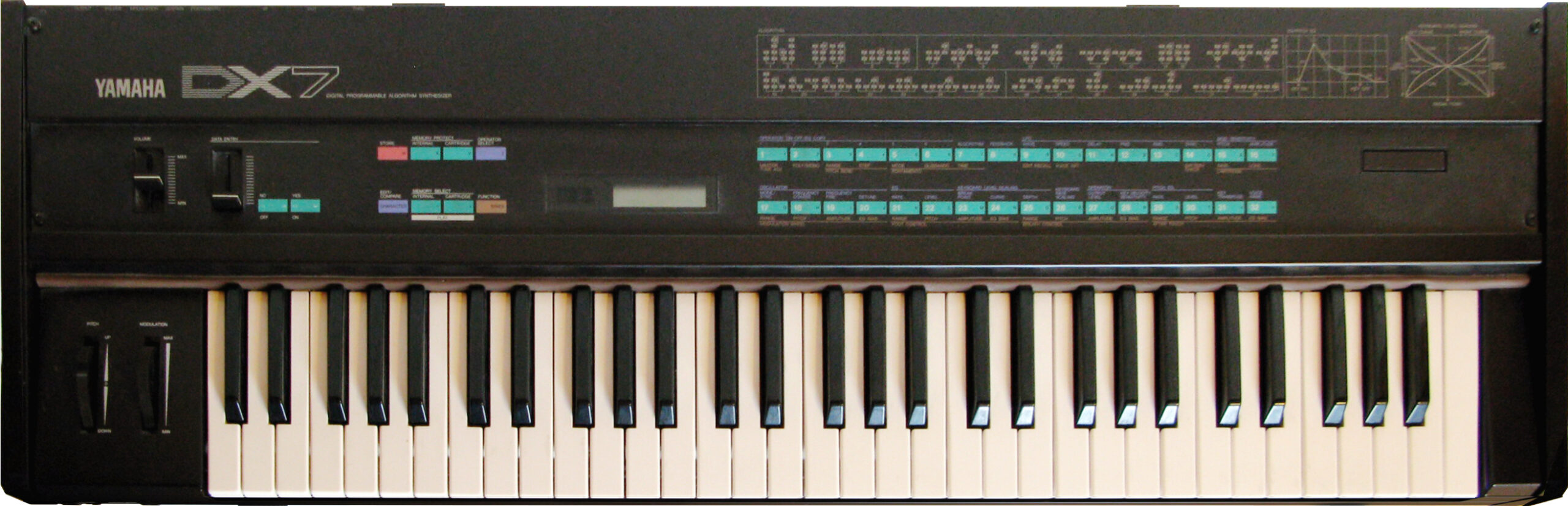
The DX7’s programming interface represents one of the most user-hostile designs ever implemented in a popular synthesizer. The tiny LCD screen displays cryptic abbreviations, while the membrane button layout feels like navigating a calculator rather than a musical instrument. Parameters are buried three or four levels deep in convoluted menus, making real-time sound editing nearly impossible.
Unlike analog synthesizers, where you can turn a knob to shape your sound, the DX7 forces you through endless button combinations just to adjust basic parameters. Want to modify the attack time? Prepare to press Data Entry, Function, Edit, and navigate through multiple screens. This complexity explains why most DX7 owners never ventured beyond the factory presets—the learning curve was simply too steep for practical music-making.
2. Complex MIDI Implementation
Despite being one of the first synthesizers to feature MIDI, the DX7’s implementation was frustrating. System-exclusive data transmission was cumbersome, making patch transfers between the unit and a computer a tedious process. Many musicians struggled with MIDI timing issues and incomplete parameter mapping, which limited the instrument’s integration with other gear.
The MIDI specification felt more like an afterthought than a core feature, with many advanced functions remaining inaccessible through external control. This created headaches for studio musicians who needed seamless integration with sequencers and other MIDI equipment.
Sound Quality Issues That Time Forgot
3. Harsh Digital Sound Character
While the DX7’s FM synthesis was revolutionary, many listeners found its sound to be brittle and metallic, compared to the warmth of analog synthesizers. The digital character could be fatiguing in mixes, especially when layered with other instruments. Musicians accustomed to the lush textures of Moogs, Oberheims, or Prophet-5s often described the DX7 as cold and sterile.
This harshness became particularly apparent in ensemble playing, where the DX7’s sounds could cut through mixes in an unpleasant way. The digital artifacts made sustained sounds feel artificial and lifeless compared to analog alternatives.
4. Limited Velocity Response
The DX7’s velocity implementation was severely limited, as it failed to utilize the full 128-step MIDI range. For example, my DX7II responds to only 100 of the available 128 velocity values, resulting in limited dynamics. This limitation is apparent when you connect the midi out of the DX7 to a capable master controller. Try that connection and you’ll be surprised how much more alive the DX7 sounds.
For expressive players who rely on touch sensitivity to convey musical nuance, this velocity compression proves frustrating and musically limiting. The narrow dynamic range fails to capture the subtle gradations that make acoustic instruments so compelling.
Performance and Creative Limitations
5. Lack of Real-Time Controls
The DX7 offers virtually no knobs, sliders, or real-time performance controls. This design philosophy makes it nearly useless for improvisational playing or live sound manipulation. Electronic musicians who thrive on tweaking parameters during performance found the DX7 static and uninspiring.
When I played my vintage Yamaha CS60, I was always moving sliders – portamento, glissando, filters, ring modulator, and so on. Sculpting sound in the midst of performance brings the sonics to life, yet the DX7 is severely limited in this regard. This is somewhat ironic as the instrument was released just a few years after Yamaha produced its classic CS80 and companion synths.
The single mod wheel and two sliders provide limited expression, typically controlling only vibrato or a basic function called up through the menu. Compared to analog synthesizers that encourage exploration and real-time manipulation, the DX7 feels restrictive and predetermined.
6. No Onboard Effects
The original DX7 shipped without built-in effects, such as reverb, chorus, or delay. Its raw digital tones sounded thin and dry without external processing. For gigging musicians without racks of effects processors, this limitation made the DX7 sound cheap and amateur in live contexts.
This lack of ambience and spatial processing meant that the DX7’s sounds often felt flat and lifeless compared to synthesizers that included basic effects processing. The clean digital output, while technically impressive, lacked the character that onboard effects could provide.
Cultural and Musical Impact Problems
7. Overused Presets and Sonic Clichés
The DX7 became notorious for its instantly recognizable presets, particularly the infamous “E. Piano 1” patch that appeared on countless 1980s recordings. This overexposure created sonic fatigue among listeners and made the instrument synonymous with dated production techniques.
Because so many musicians relied on the same factory sounds, the DX7 contributed to a homogenization of popular music. Instead of encouraging sonic diversity, it created a generation of keyboard players who all sounded remarkably similar.
8. Easily Dated Sound Aesthetic
The DX7’s distinctive character became so tied to 1980s popular music that it quickly sounded outdated. By the 1990s, many producers actively avoided DX7 sounds because they immediately identified recordings as “eighties music.” This dating problem limited the instrument’s long-term relevance in contemporary productions.
While some vintage sounds experience cyclical revivals, the DX7’s aesthetic has remained stubbornly tied to its original era, making it less versatile than truly timeless synthesizers.
Technical and Practical Shortcomings
9. Importing Sysex Complications
Transferring sounds via system-exclusive data remains a cumbersome process that requires specialized editor software or library programs, which are increasingly difficult to find. Modern DAW integration often fails to properly handle DX7 sysex data, creating compatibility headaches for contemporary users.
Even when sysex transfers succeed, they often fail to include modulation wheel programming and other performance parameters. This incomplete data transfer means that patches rarely sound identical to their original programming, defeating the purpose of sound sharing.
10. Limited Memory and Organization
The DX7’s 32-patch internal memory feels laughably restrictive by modern standards. Musicians needed expensive RAM cartridges to expand their sound libraries, and those cartridges were prone to data corruption and battery failure.
The instrument offers no intuitive way to organize sounds beyond basic numerical listing. Finding specific patches becomes a memory exercise rather than a creative workflow, especially when working with large external libraries.
11. No Sequencer or Arpeggiator
As a performance instrument, the DX7 offered no built-in sequencing or arpeggiation features. This limitation meant that the DX7 was strictly a sound module with a keyboard attached, requiring external equipment for any advanced musical functionality.
Competitors began integrating workstation features during the DX7’s peak years, making it seem primitive and limited by comparison. Musicians seeking creative inspiration found little help from the DX7’s basic feature set.
Modern Context and Alternatives
12. Superior Modern Alternatives
Contemporary musicians have access to far superior FM synthesis through software like Arturia’s DX7 soft synth or Native Instruments’ FM8. These modern implementations offer the classic DX7 sounds with user-friendly interfaces, extensive real-time controls, and seamless DAW integration.
Hardware alternatives, such as modern synths with FM capabilities, provide the classic sounds alongside contemporary features that make them more musical and practical for today’s production workflows. The original DX7’s limitations become glaring when compared to these evolved instruments.
The Value Proposition Reality
Ironically, used DX7 synthesizers can be found for under $1,000, while vintage analog synthesizers command astronomical prices—Yamaha CS80s sell for over $70,000, and Oberheim 4 Voice units exceed $25,000. This price disparity suggests that the market recognizes the DX7’s limitations compared to truly legendary vintage instruments.
The relatively low resale value reflects the instrument’s reduced desirability among serious collectors and professional musicians. While affordable, this pricing indicates that the DX7’s reputation may exceed its actual musical value.
Still, shortly after the release of the Yamaha DX7, I could barely give my classic Yamaha CS60 away. In the late 1980s, I was only able to sell the analog synth for $200. Fast forward to today, and that CS60 can command a price approaching $10,000.
Time will tell if keyboard players will put a premium on used hardware synths of the Yamaha DX line. The DX1 is already in this enviable category. With prices on the used market still reasonable, if you are drawn to the instrument despite its shortcomings, now may be a great time to purchase a unit.
Frequently Asked Questions – Yamaha DX7
Is the DX7 worth buying for a beginner?
For beginners, modern FM soft synths provide a more engaging learning experience with visual feedback and intuitive interfaces. The DX7’s programming complexity can discourage exploration rather than encourage it.
Why did the DX7 become so popular despite its limitations?
The DX7’s success stemmed from its affordable pricing, reliable MIDI implementation (for its time), and distinctive sound during an era when digital synthesis was a revolutionary innovation. Marketing and timing were crucial factors.
Are there any advantages to owning an original DX7?
The original DX7 offers authentic vintage character and can be valuable for musicians specifically seeking that exact sonic footprint. However, for most applications, modern alternatives provide superior functionality.
How does the DX7 compare to modern FM synthesizers?
Modern FM synthesizers typically offer more intuitive programming, better real-time controls, onboard effects, and expanded sound capabilities while maintaining the classic FM character.
The Verdict on a Controversial Classic
The Yamaha DX7 deserves recognition for its historical significance and technological innovation. It democratized synthesis, introduced FM to the masses, and left an indelible mark on popular music. However, its legendary status shouldn’t blind us to its substantial limitations.
The instrument’s difficult programming interface, harsh digital character, limited performance features, and dated aesthetic make it less appealing than nostalgia would suggest. For modern musicians, software alternatives and contemporary hardware offer the DX7’s sonic benefits without its frustrating limitations.
Rather than clinging to vintage gear purely for its reputation, consider whether the DX7 actually serves your musical needs or merely satisfies a nostalgic yearning for the “good old days.” Sometimes, the most honest assessment reveals that progress has indeed been made.
The DX7’s affordable used market pricing shows that there is still time to add this keyboard to your hardware arsenal if the DX7 cons don’t turn you away. I still own my DX7iiFD and have no intention of parting with it anytime soon.
Thanks for reading this article about Yamaha DX7 cons.
Arthur Dobrucki
Watch The Yamaha DX7 Overrated Synth Video
