
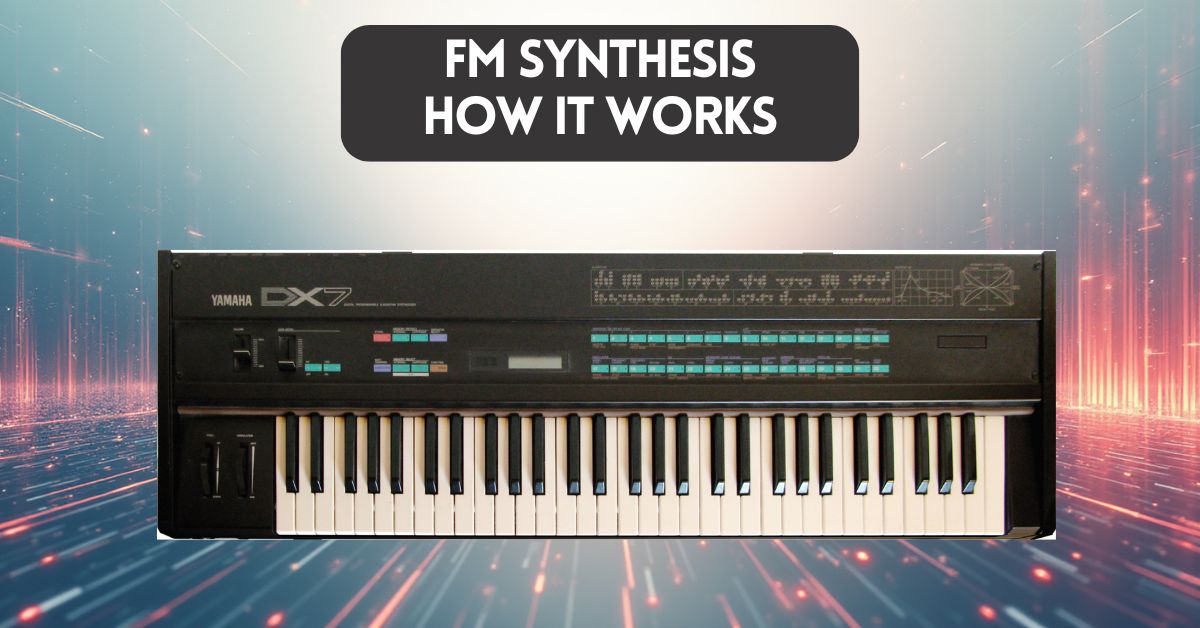
The Yamaha DX7 revolutionized music in the 1980s with sounds nobody had heard before. This groundbreaking synthesizer used FM synthesis technology to create everything from crystal-clear electric pianos to otherworldly sound effects that defined an entire decade of music. But understanding how FM synthesis works on the Yamaha DX7 is elusive to many people.
So, what exactly is FM synthesis, and why did the DX7 become such a game-changer? Whether you’re curious about vintage synthesizers or wondering how your favorite 80s hits got their signature sounds, this guide will help you understand the magic behind one of music’s most influential instruments.
Azure Hills Music contains affiliate links and is a member of the Amazon Services LLC Associates Program. As an Amazon Associate, we earn from qualifying purchases at no extra cost to you when you purchase using one of these Amazon links. Read our disclaimer and privacy policy for more information.
What is FM Synthesis?
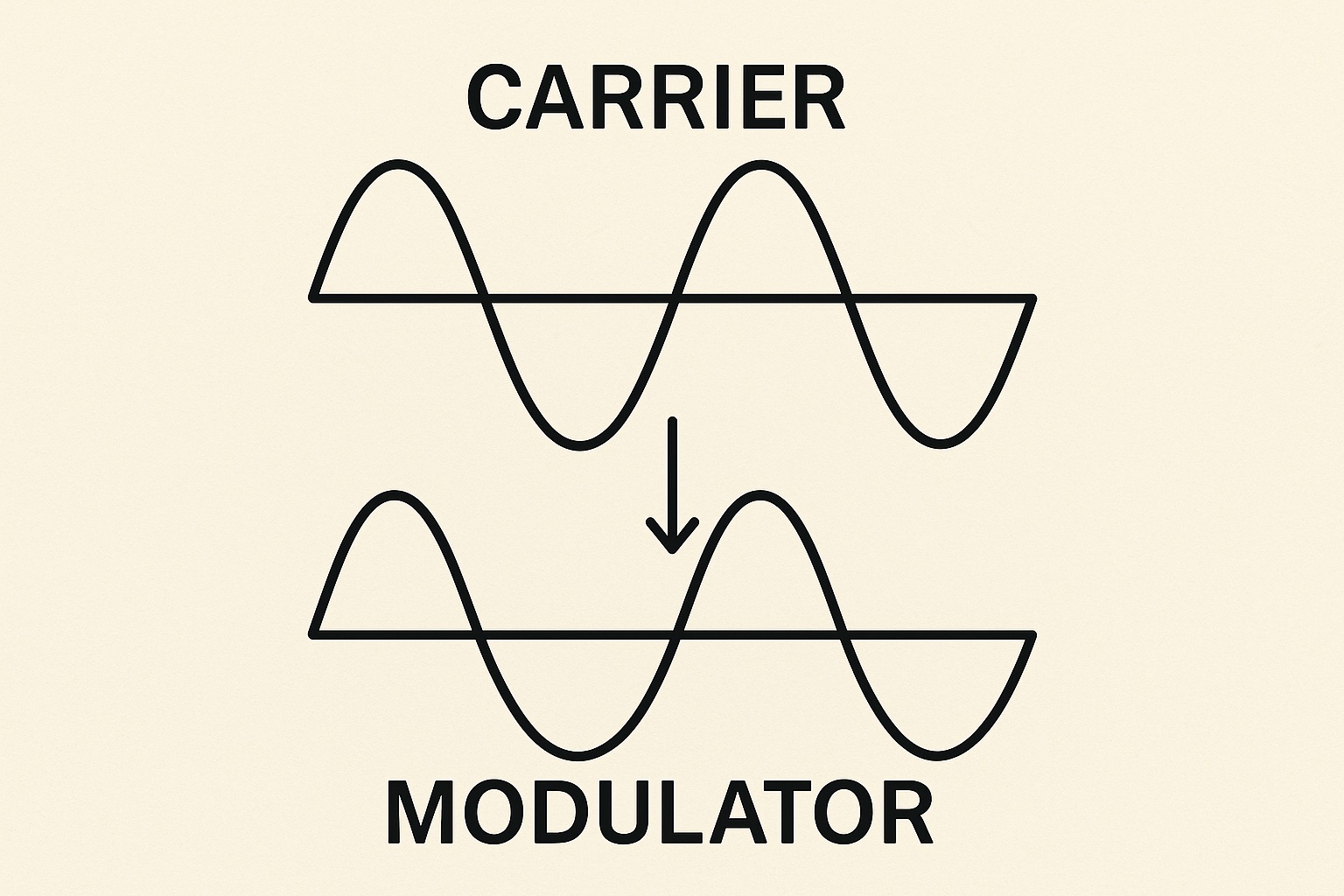
FM synthesis stands for Frequency Modulation synthesis. Think of it like this: instead of starting with a basic wave and adding filters (like most synthesizers do), FM synthesis creates sounds by having one wave change or “modulate” another wave’s frequency.
Here’s a simple way to picture it: imagine you’re singing a steady note, and someone keeps gently pushing your throat up and down. Your voice would wobble in pitch—that’s similar to what happens in FM synthesis, except it happens thousands of times per second.
In FM synthesis, you have:
- Carriers: The waves you actually hear
- Modulators: The waves that change the carriers (but you don’t hear them directly)
When modulators affect carriers at very high speeds, they create entirely new harmonics and tones. This is why FM synthesis can produce sounds that seem to come from nowhere—like metallic bells, glassy pianos, or ethereal pads that sound almost magical.
How FM Synthesis Works on the Yamaha DX7
The DX7 uses six operators to create its sounds. Think of operators as individual sound generators that can either make sounds you hear (carriers) or change other sounds (modulators).
The DX7’s Algorithm System
The DX7 organizes these six operators using 32 different algorithms. An algorithm is basically a recipe that tells the operators how to work together. Some algorithms create simple sounds with just one or two operators, while others use all six operators in complex relationships.
For example:
- Algorithm 1 might have all six operators connected in a chain, creating very complex, evolving sounds
- Algorithm 32 might have several operators working as simple carriers, producing cleaner, more traditional sounds
Key Components on the DX7
Envelopes: Each operator has its own envelope that controls how the sound starts, sustains, and fades away. With six operators, you can create incredibly detailed sound shapes.
Frequency Ratios: Instead of setting exact pitches, the DX7 uses ratios. An operator might run at 2.00 times the base frequency, creating harmony, or at 3.14 times, creating more complex relationships.
Feedback: Some operators can modulate themselves, creating everything from subtle warmth to screaming distortion.
Benefits of FM Synthesis
Incredible Sound Variety
FM synthesis can create sounds that traditional analog synthesizers simply cannot make. The DX7 could produce:
- Realistic electric pianos and organs
- Metallic percussion sounds like bells and chimes
- Evolving ambient textures
- Sharp, cutting leads
- Warm bass sounds
Memory Efficiency
Unlike sample-based instruments that require a lot of memory to store recordings, FM synthesis generates everything mathematically. The DX7 could store 32 sounds in its internal memory—impressive for 1983 technology.
Consistent Tuning
Because FM synthesis is digital, every note plays perfectly in tune. Analog synthesizers of the time often had tuning drift, but the DX7 stayed rock-solid.
Affordability
When the DX7 launched at $1,995, it cost about half as much as comparable professional synthesizers while offering more sounds and features.
FM vs. Analog Synthesis: Sound Examples
Electric Piano
Analog synthesizer: Would struggle to create a convincing electric piano sound. You might get something piano-like, but it would sound obviously synthetic.
DX7: The famous “E.PIANO 1” preset sounds remarkably close to a real Fender Rhodes electric piano, complete with the subtle bell-like harmonics that make electric pianos special.
Bell Sounds
Analog synthesizer: Could create bell-like sounds using filters and envelopes, but they’d sound somewhat hollow or artificial.
DX7: Creates incredibly realistic bell and chime sounds with complex harmonic structures that seem to shimmer and evolve naturally.
Bass Sounds
Analog synthesizer: Excels at warm, fat bass sounds with character and punch.
DX7: Can create very clean, precise bass sounds, but they often lack the warmth and character that analog synthesizers provide naturally.
Ambient Textures
Analog synthesizer: Great at lush, evolving pads with analog warmth, but limited in harmonic complexity.
DX7: Can create otherworldly textures with incredible harmonic complexity—sounds that seem to morph and breathe in ways analog synths cannot match.
Is FM Synthesis Difficult to Program on the DX7?
The honest answer? Yes, the DX7 can be challenging to program, especially when you’re starting out. Here’s why:
The Challenges
Complex Interface: The DX7 has a small LCD screen and lots of buttons. Creating sounds requires navigating through multiple menus and parameters.
Mathematical Relationships: Understanding how frequency ratios affect sound requires some musical math. A ratio of 2.00 creates an octave, but what does 1.41 create? It takes time to learn these relationships.
Interaction Complexity: With six operators that can interact in 32 different ways, small changes can dramatically alter your sound in unexpected ways.
Making It Easier
Start with Presets: The DX7 came with amazing factory sounds. Study these presets to understand how different algorithms work.
Change One Thing: When editing, change only one parameter at a time so you can hear exactly what it does.
Use Software: Modern software like Native Instruments FM8 or Arturia DX7 V provides visual interfaces that make FM synthesis much easier to understand.
Learn Common Ratios: Certain frequency ratios consistently produce musical results. Start with simple ratios like 1.00, 2.00, and 3.00 before exploring more complex relationships.
The DX7’s Musical Legacy
The Yamaha DX7 didn’t just introduce FM synthesis to the world—it shaped the sound of popular music throughout the 1980s and beyond. You can hear its influence on countless hit records, from Whitney Houston’s “I Wanna Dance with Somebody” to countless new wave and pop songs.
Its electric piano sounds became so iconic that even today, when producers want that “80s sound,” they often reach for DX7 samples or emulations. The synthesizer proved that digital technology could create sounds with real musical character and emotional impact.
FM synthesis on the DX7 opened up new sonic territories that musicians are still exploring today. While it may have a learning curve, the rewards include access to a universe of sounds that simply cannot be created any other way.
Whether you’re interested in recreating classic 80s sounds or pushing into new musical territory, understanding FM synthesis gives you tools that remain as powerful and relevant today as they were when the DX7 first changed everything.
Thanks for stopping by to read this article about understanding FM synthesis on the Yamaha DX7 synthesizer.
Art Dobrucki
Azure Hills Music
Related Reading
Is the Yamaha DX7 overrated?
Using the Strymon Flint pedal on a dry synthesizer
Yamaha DX7 with Chorus pedal