
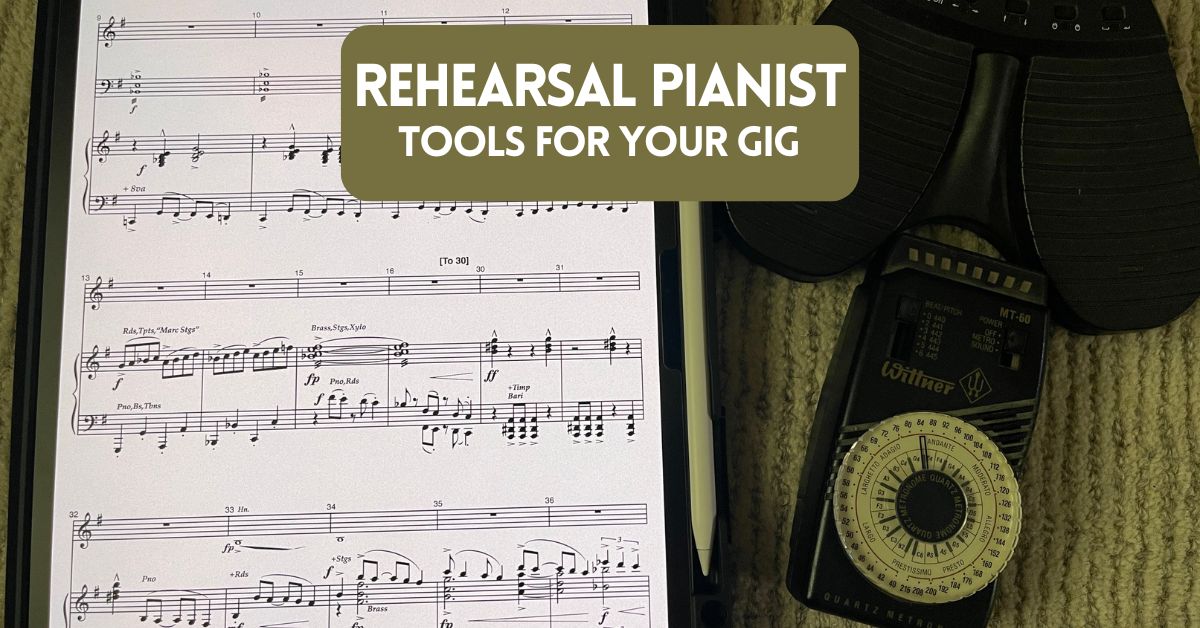
Stepping into your first rehearsal as a pianist can feel like entering uncharted territory. Your sheet music is digital, your metronome lives on your phone, and suddenly you’re wondering what exactly you should pack in that gear bag for your essential rehearsal pianist tools.
After years of working as a rehearsal pianist across different venues and productions, I’ve learned that preparation makes all the difference. The right gear bag can transform a stressful rehearsal into a smooth, professional experience. Some items are absolute essentials, while others are helpful additions that can save you from those “I wish I had…” moments.
This guide walks you through nine essential items that belong in every rehearsal pianist’s gear bag, from the obvious must-haves to the surprising tools that seasoned professionals swear by. Whether you’re preparing for your first summer musical or adding to your existing setup, these insights will help you show up ready for anything.
Azure Hills Music contains affiliate links and is a member of the Amazon Services LLC Associates Program. As an Amazon Associate, we earn from qualifying purchases at no extra cost to you when you purchase using one of these Amazon links. Read our disclaimer and privacy policy for more information.
Click Here To Get Your FREE Rehearsal Pianist Tools Checklist!
The Foundation: Choosing Your Gear Bag
Before diving into what goes inside, let’s talk about the bag itself. Over the years, I’ve experimented with countless bags, and I’ve learned that investing in quality makes a significant difference.
Essential Item #1: Quality Gig Bag
What Makes a Great Rehearsal Bag
The ideal rehearsal bag should be sturdy enough to withstand daily transport while providing ample space for all your essentials. Rolling bags with wheels are game-changers, especially when you’re moving between venues regularly. Look for bags with multiple compartments to keep your gear organized and easily accessible.
A high-quality bag, such as my Briggs & Riley model, can last for years of regular use. The wheeled design and extendable handle make transportation effortless, and the multiple compartments keep everything organized. Remember, this bag will be your mobile office, so comfort and durability are worth the investment.
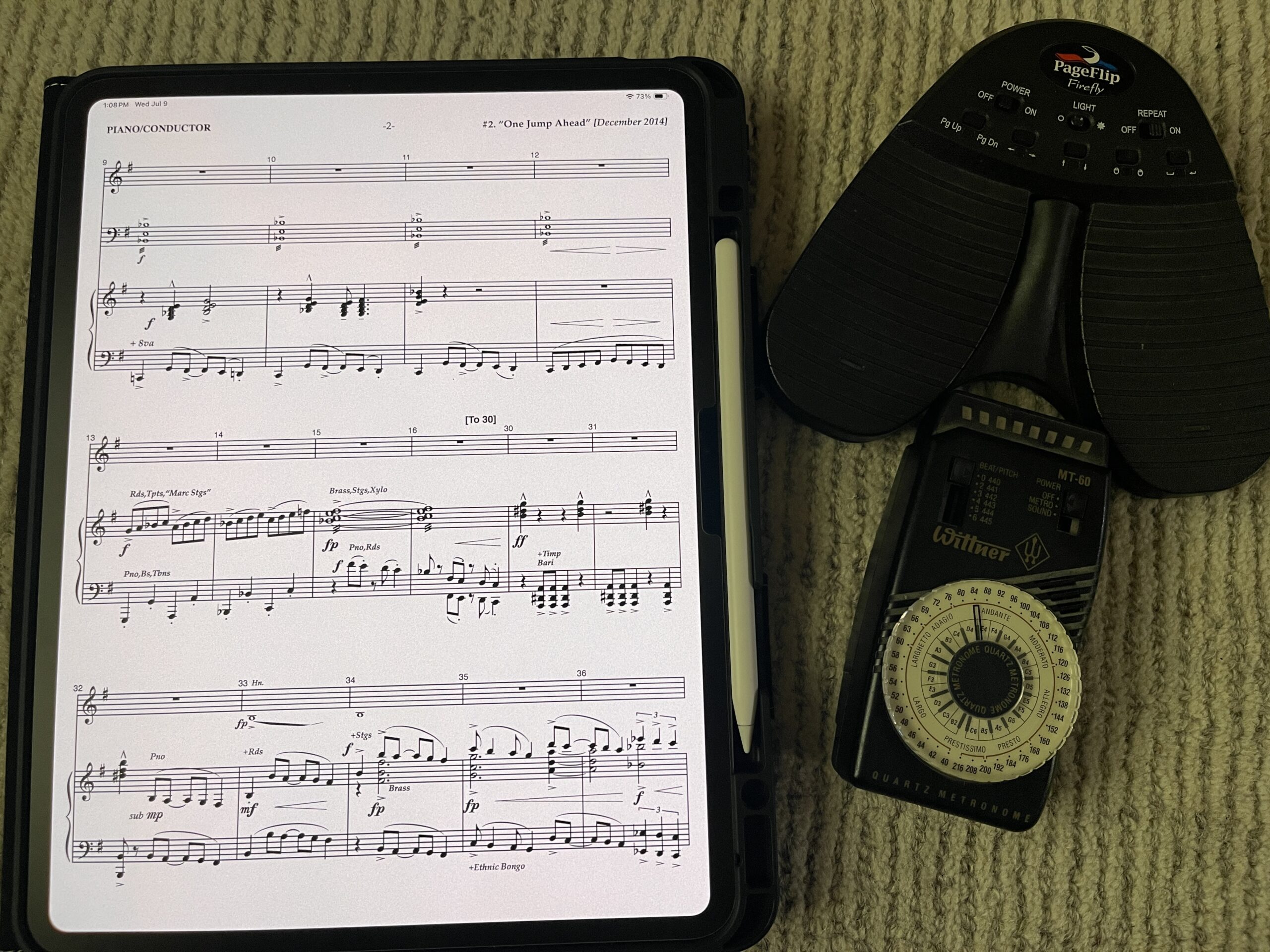
Essential Item #2: iPad Pro 13-inch
The Digital Music Revolution
Gone are the days of hauling binders full of sheet music. The iPad Pro 13-inch model has revolutionized how rehearsal pianists work, offering unprecedented convenience and functionality.
The larger screen size is crucial for reading dense orchestral scores. When you’re sight-reading complex arrangements, every inch of screen space matters. The 13-inch model enables you to display two pages side by side in landscape mode, replicating the traditional sheet music experience while offering digital advantages.
Why Size Matters
Dense scores become significantly more readable on the larger display. Whether you’re working through a challenging musical theater piece or navigating a complex classical arrangement, the extra screen real estate reduces eye strain and improves accuracy. The ability to store hundreds of scores on a single device eliminates the physical burden of carrying multiple binders.
Essential Item #3: Apple Pencil Pro
Precision Note-Taking
The Apple Pencil Pro transforms your iPad into a professional annotation tool. Making legible notes on digital scores becomes effortless, whether you’re marking dynamics, adding fingerings, or noting rehearsal changes.
The precision of the Apple Pencil far exceeds finger-based notation. You can write detailed notes, circle important passages, and create clear markings that enhance your performance. This tool bridges the gap between traditional paper-based annotation and digital convenience.
Professional Benefits
Musicians who use the Apple Pencil report improved organization and clearer communication with directors and fellow musicians. The ability to quickly mark up scores during rehearsal and save those annotations for future reference streamlines the entire rehearsal process.
Essential Item #4: iPad Charger
Power Management Strategy
Battery life anxiety is real for digital musicians. Your iPad charger isn’t just a backup—it’s insurance against performance disasters. Many rehearsal spaces offer limited charging opportunities, so having your own charger ensures uninterrupted access to your music library.
Plan your charging strategy around your rehearsal schedule. Charge your device fully before each session, and keep the charger accessible for longer rehearsal days. Some venues have convenient charging stations, while others require you to be resourceful about finding power sources.
Essential Item #5: Metronome
Modern Timing Solutions
Physical metronomes still have their place, and I always have one by my piano. Today, smartphone metronome apps offer convenience and reliability. An app version is what I always reach for when I’m at rehearsal, making timing reference constantly available.
Strategic Use During Rehearsals
The metronome becomes particularly valuable when working with unfamiliar pieces of music. During short breaks, you can quickly check the tempo marking, internalize the pulse, and feel prepared when the rehearsal resumes. This preparation technique helps you establish the correct tempo from the very first measure.
Metronome apps often offer additional features, such as visual cues, various sound options, and tap-tempo functionality, that enhance their usefulness beyond traditional mechanical metronomes.
Essential Item #6: Curated Playlists
Audio Reference Library
Creating Spotify playlists of your current repertoire provides invaluable reference material. When working on unfamiliar pieces, having quick access to professional recordings helps you understand style, tempo, and interpretation.
Rehearsal Efficiency
During breaks, you can preview upcoming pieces, refresh your memory of songs you haven’t played recently, and gain confidence with new material. This audio reference becomes especially valuable when working on musical theater pieces or contemporary songs where style and feel are crucial.
Professional recordings also help you understand how different sections should sound, improving your ability to support singers and other musicians during rehearsals.
Essential Item #7: PageFlip Bluetooth Page Turner
Hands-Free Navigation
The PageFlip Bluetooth pedal solves one of digital music’s biggest challenges: turning pages without lifting your hands from the keyboard. This wireless foot pedal connects to your iPad via Bluetooth, allowing seamless page navigation.
When to Use (and When Not to Use)
Page turners excel in situations where continuous playing is essential. They’re particularly useful during long passages where stopping to tap the screen would disrupt the musical flow. However, they can be finicky, such as when the floor surface is spongy, or when you’re wearing a new shoe.
Potential Pitfalls
Technology can fail at inconvenient moments. Accidentally pressing the pedal can cause unwanted page turns, and battery depletion during performances creates obvious problems. Understanding these limitations helps you use the device effectively while maintaining backup strategies.
Essential Item #8: Spare Batteries
Battery Backup Strategy
Battery-powered devices require battery backup plans. Whether it’s for your page turner, music stand light, or other electronic tools, having spare batteries prevents equipment failures during crucial moments.
Establish a battery replacement routine. When transitioning from rehearsals to performances, install fresh batteries in all devices. This proactive approach eliminates the risk of mid-performance battery failure.
Essential Item #9: Rechargeable Music Stand Light
Illumination Solutions
Lighting conditions vary dramatically between venues. The Kootek rechargeable clip-on light for music stands provides reliable illumination when ambient lighting falls short.
Digital vs. Physical Music Considerations
iPad screens provide their own illumination, reducing the need for external lighting when reading digital scores. However, traditional sheet music still appears in many rehearsal situations, making a quality light source essential.
The rechargeable feature eliminates battery concerns, and the clip-on design adapts to various music stands and piano configurations.
Essential Item #10: Traditional Tools Kit
The Analog Essentials
Despite our digital age, traditional tools remain relevant. A small bag containing pencils, pens, and paper clips handles situations where old-school solutions work best.
Honoring Musical Traditions
Many music educators emphasize the importance of always having a pencil at rehearsal. This tradition exists for good reason—musical notation, whether digital or physical, often requires quick modifications and personal notations.
Practical Applications
Paper clips help organize loose sheet music, pencils work on any surface, and pens provide permanent marking options. These simple tools solve problems that digital solutions sometimes can’t address.
Bonus Item: Reinforcement Labels
Maintaining Physical Scores
When working with traditional sheet music in binders, reinforcement labels extend the life of frequently used pages. These small adhesive circles strengthen hole-punch areas that experience regular wear.
While this may seem like a minor detail, professional musicians understand that maintaining organized and readable music enhances performance quality and demonstrates professionalism.
Building Your Personal Setup
Customization Considerations
Every rehearsal pianist develops personal preferences based on their work environment, repertoire, and performance style. Begin with these essential items, then tailor your kit according to your experience.
Consider your typical venues, the types of music you perform, and your personal working style. Some pianists add items like lens cleaning cloths for their tablets, while others include specific cables or adapters for venue sound systems.
Evolution and Adaptation
Your gear bag will evolve as technology changes and your professional needs develop. Stay open to new tools and techniques while maintaining reliable backup solutions for your essential items.
Click Here To Get Your FREE Rehearsal Pianist Tools Checklist!
Ready to Elevate Your Performance?
The difference between a good rehearsal pianist and a great one often comes down to preparation. Having the right tools at your fingertips allows you to focus on what matters most: making music.
Start building your professional gear bag today. Begin with the essentials—iPad Pro, Apple Pencil, and reliable charging solutions—then add items based on your specific needs and working environment.
Remember, the best gear bag is the one that serves your unique musical journey. Use these recommendations as a starting point, then tailor your setup to align with your professional aspirations and performance goals.
What would you add to this list? Every experienced rehearsal pianist has discovered tools and techniques that make their work more efficient and enjoyable. The music community thrives when we share these insights with one another.
Thanks for stopping by to read this article about rehearsal pianist tools.
Arthur Dobrucki