
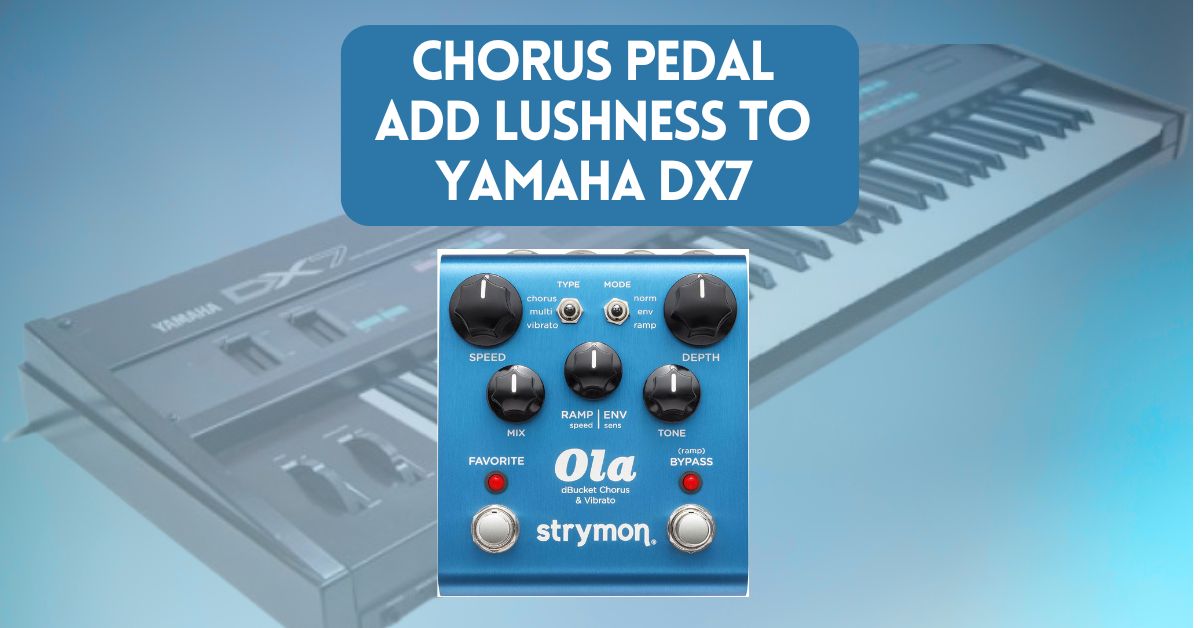
The Yamaha DX7 is a legend. If you’ve listened to pop music from the 80s, you’ve heard its iconic sounds—especially that unmistakable electric piano. But even legends can use a little help to shine brighter. While the DX7 is a powerhouse of digital synthesis, its onboard effects are minimal. That’s where a great effects pedal comes in. Pairing this classic synth with the right pedal can elevate its timeless tones into something truly special.
This guide will show you how pairing the Yamaha DX7 with a chorus pedal, like the Strymon Ola Chorus & Vibrato pedal, can breathe new life into your sound. We’ll explore why the DX7 benefits from external effects, dive into what makes the Strymon Ola pedal so unique, and highlight specific DX7 patches that sound incredible with a touch of chorus. Get ready to transform your sound and rediscover the magic of the DX7.
Azure Hills Music contains affiliate links and is a member of the Amazon Services LLC Associates Program. As an Amazon Associate, we earn from qualifying purchases at no extra cost to you when you purchase using one of these Amazon links. Read our disclaimer and privacy policy for more information.
Why the DX7 Needs an Effects Pedal
The Yamaha DX7 revolutionized the music world with its FM (Frequency Modulation) synthesis. It created sounds that were crystal clear, complex, and unlike anything that came before. From shimmering bells to punchy basses and, of course, those classic E-Piano patches, the DX7 defined the sound of a decade.
However, to keep the instrument accessible and focused on its powerful synthesis engine, Yamaha made a few compromises. One of the most significant was the lack of built-in effects. While some later DX models included a basic chorus, the original powerhouse DX7 and its most common variations were dry. This means the raw sound from the synthesizer is what you get—no reverb, no delay, and no chorus.
This is where effects pedals come in. By adding a pedal, you can:
- Add space and depth: Reverb and delay can place your sound in a virtual room, from a small studio to a vast concert hall.
- Introduce movement: Chorus, flanger, and phaser effects create a sense of motion and width, making a static sound feel alive and dynamic.
- Shape the tone: EQ and drive pedals can alter the fundamental character of a sound, adding warmth, grit, or clarity.
For the DX7, a chorus effect is particularly transformative. The crisp, sometimes sterile, nature of FM synthesis is the perfect canvas for the lush, swirling textures of a high-quality chorus. It thickens the sound, smooths out the digital edges, and adds a rich, professional polish that was a hallmark of so many 80s recordings. While producers in the 80s used expensive rack-mounted studio effects to achieve this, today’s musicians can get that same premium sound from a compact pedal.
Meet the Strymon Ola Chorus & Vibrato
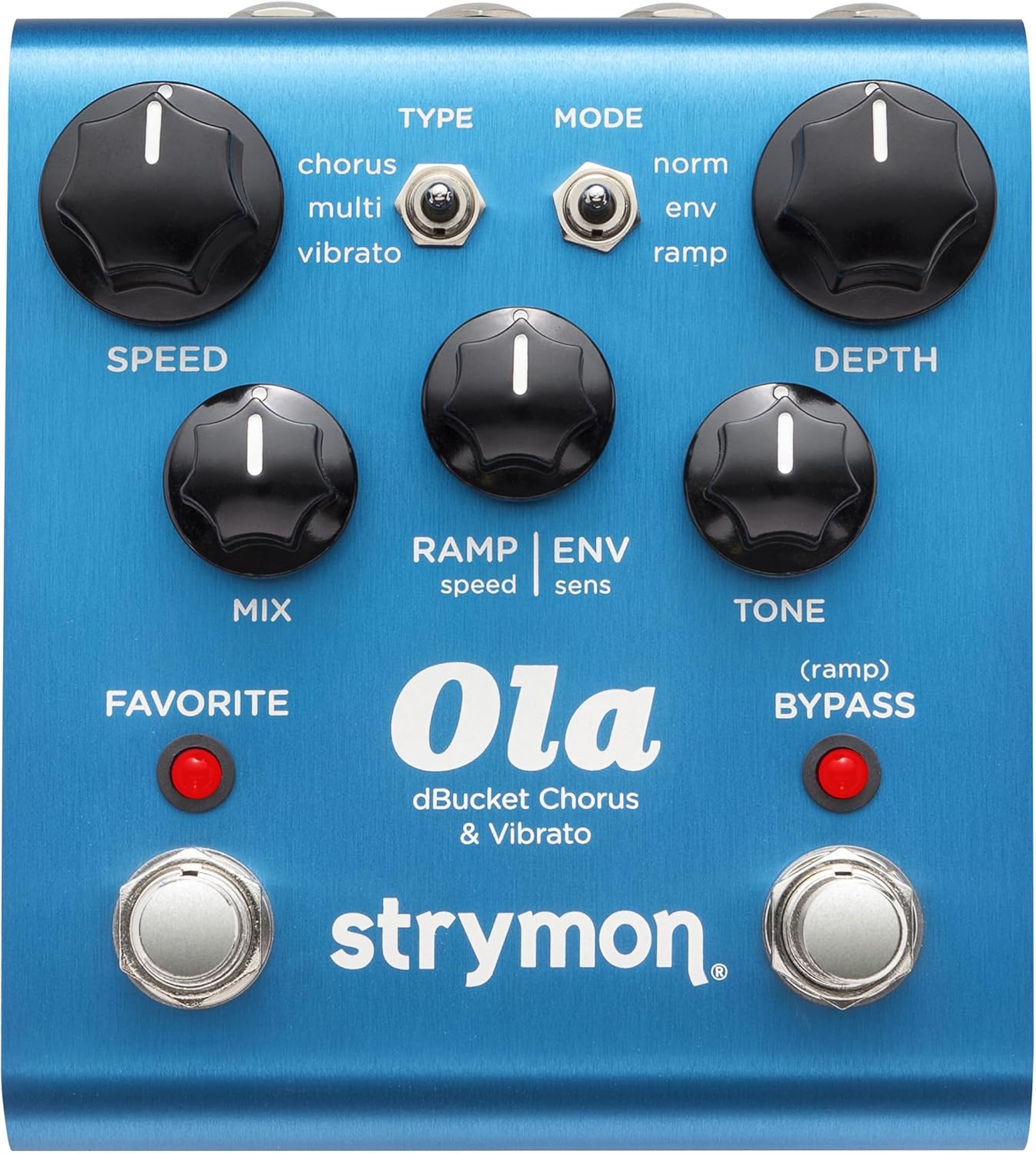
When it comes to high-quality digital effects, Strymon is a name that consistently stands out. Their pedals are renowned for their pristine sound quality, deep editing capabilities, and robust build. The Strymon Ola Chorus & Vibrato is no exception and is an ideal partner for the Yamaha DX7.
The Ola isn’t just a one-trick pony; it’s a comprehensive modulation toolkit in a single box. It offers three distinct modes that give you a wide palette of sounds to work with:
- Single Chorus: This mode delivers a classic, lush chorus sound reminiscent of vintage studio gear. It’s perfect for adding a warm, gentle shimmer to your synth patches without overwhelming them.
- Multi-Chorus: This mode stacks multiple chorus lines to create an incredibly dense and complex sound, similar to the studio rack effects used on countless 80s hits. When you want that huge, expansive synth sound, this is the mode to use.
- Vibrato: This setting provides a pure pitch modulation, creating anything from a subtle waver to a deep, warbling effect that can add a vintage, lo-fi character to your sound.
One of the Ola’s standout features is its d-Bucket algorithm. This technology meticulously recreates the sonic complexities of analog bucket-brigade device (BBD) chips, which were the heart of classic analog chorus pedals. This gives you the warmth and character of analog gear with the reliability and low noise floor of a modern digital pedal. The Ola gives you the best of both worlds, which is exactly what the digital DX7 needs.
The DX7’s Best Sounds for Chorus
While you can run almost any sound through a chorus pedal for interesting results, some of the DX7’s patches are practically begging for it. The digital clarity of these sounds provides the perfect foundation for the Ola’s lush modulation.
Electric Pianos: The Iconic Pairing
This is the quintessential DX7 sound, and it’s where the Ola truly shines. The most famous patch, E.PIANO 1, is known for its bright, bell-like attack and dynamic response. On its own, it can sound a bit thin. But run it through the Strymon Ola, and it’s instant magic.
- How to dial it in: Start with the Ola in Single Chorus mode. Set the Mix knob to around 50%, the Speed low, and the Depth to a moderate level. This will give you that classic, shimmering Whitney Houston or Chicago-style electric piano sound. The chorus adds a beautiful sense of movement and stereo width that makes the patch feel full and polished.
- For a bigger sound: Switch to the Multi-Chorus mode. You’ll immediately hear the sound become denser and more expansive. This is perfect for power ballads or any track where you want the electric piano to fill a lot of space in the mix.
Other electric piano patches, like the softer FullTines, also benefit immensely from chorus. The effect enhances their warmth and sustain, making them perfect for soulful chords and melodies.
Other Sounds That Love Chorus
Beyond the electric pianos, many other DX7 patches come to life with the addition of the Ola pedal.
- Bells and Mallets: The DX7 is famous for its crystalline, metallic sounds. Patches like TUBULARBELLS or VIBRAPHONE can sound stunning with a slow, deep chorus. The effect adds a dreamy, ethereal quality to their sharp transients.
- Synth Pads and Strings: While the DX7 isn’t primarily known for analog-style pads, patches like STRINGS 1 or other sustained sounds can be thickened up beautifully. The Ola’s Multi-Chorus mode can turn a relatively simple digital string patch into a lush, evolving soundscape.
- Bass Sounds: This might seem unconventional, but a touch of chorus on a DX7 bass patch can work wonders. On a classic patch like BASS 1, a slow and subtle chorus can add width and movement, helping the bass sit perfectly in a mix without getting muddy. Just be careful not to overdo it—a little goes a long way.
Unleash Your DX7’s Full Potential
The Yamaha DX7 is a classic for a reason. Its unique approach to synthesis created a sonic palette that has remained relevant for decades. However, by pairing it with a high-quality effects pedal like the Strymon Ola Chorus & Vibrato, you can unlock a new level of sonic possibility. The lush, warm modulation of the Ola is the perfect complement to the DX7’s clean, digital tones, adding the depth, movement, and professional polish that defined so many classic recordings.
Whether you’re recreating iconic 80s sounds or crafting something entirely new, this combination offers a world of creative potential. So, dust off your DX7, plug in an Ola, and start exploring. You’ll be amazed at how this perfect pairing can elevate your performance and inspire your next musical adventure.
🎶 Shop Chorus Pedals on Amazon 🎶
Watch My YouTube Video – DX7 plus Chorus Pedal

Related Articles
Bringing Life to Your Dry Synth with Strymon Flint Tremolo & Reverb
12 Cons That Make the Yamaha DX7 an Overrated Synthesizer
Thanks for stopping by to read this article about pairing the Yamaha DX7 with a Chorus Pedal!
Arthur Dobrucki